Autonomous technology is only as capable as the platform supporting it. Advanced software may guide a vehicle and perform complex tasks, but it still needs a physical foundation that performs reliably in the environments where that technology matters most.
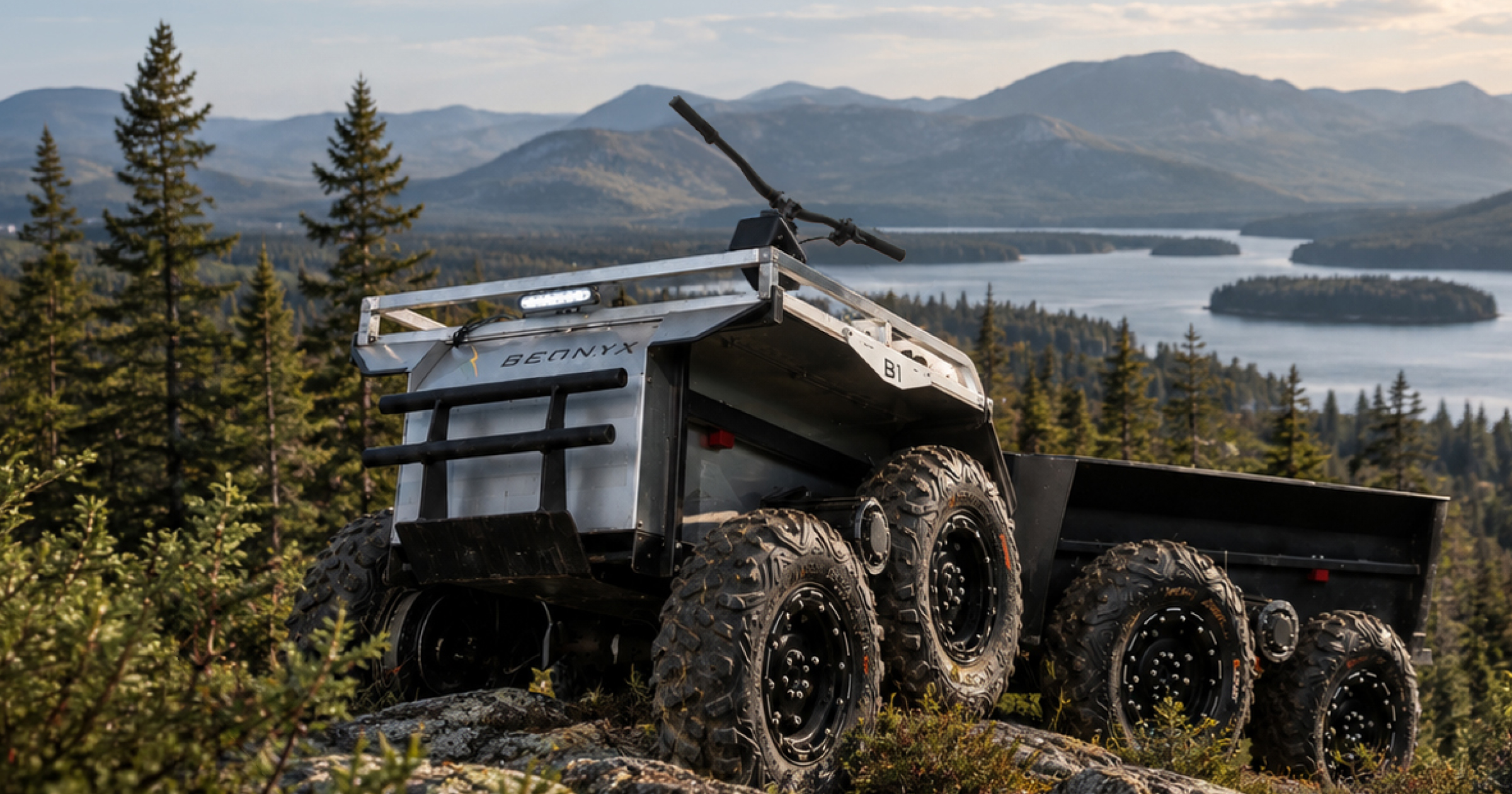
Over the past four years, Beonyx has built that foundation through continuous intentional refinement informed by extensive testing and customer feedback. The B1 has evolved from an early machine into one of Canada’s most powerful autonomous all-terrain vehicles.
Shaped by Years of Real-World Testing
Beonyx delivered its first B1 in 2023. Since then, we’ve expanded production to 12 machines, which have been evaluated by organizations operating across demanding industries, climates, and terrains. Based on what we learned, we built three further-refined B1s for another intensive round of testing and modification.
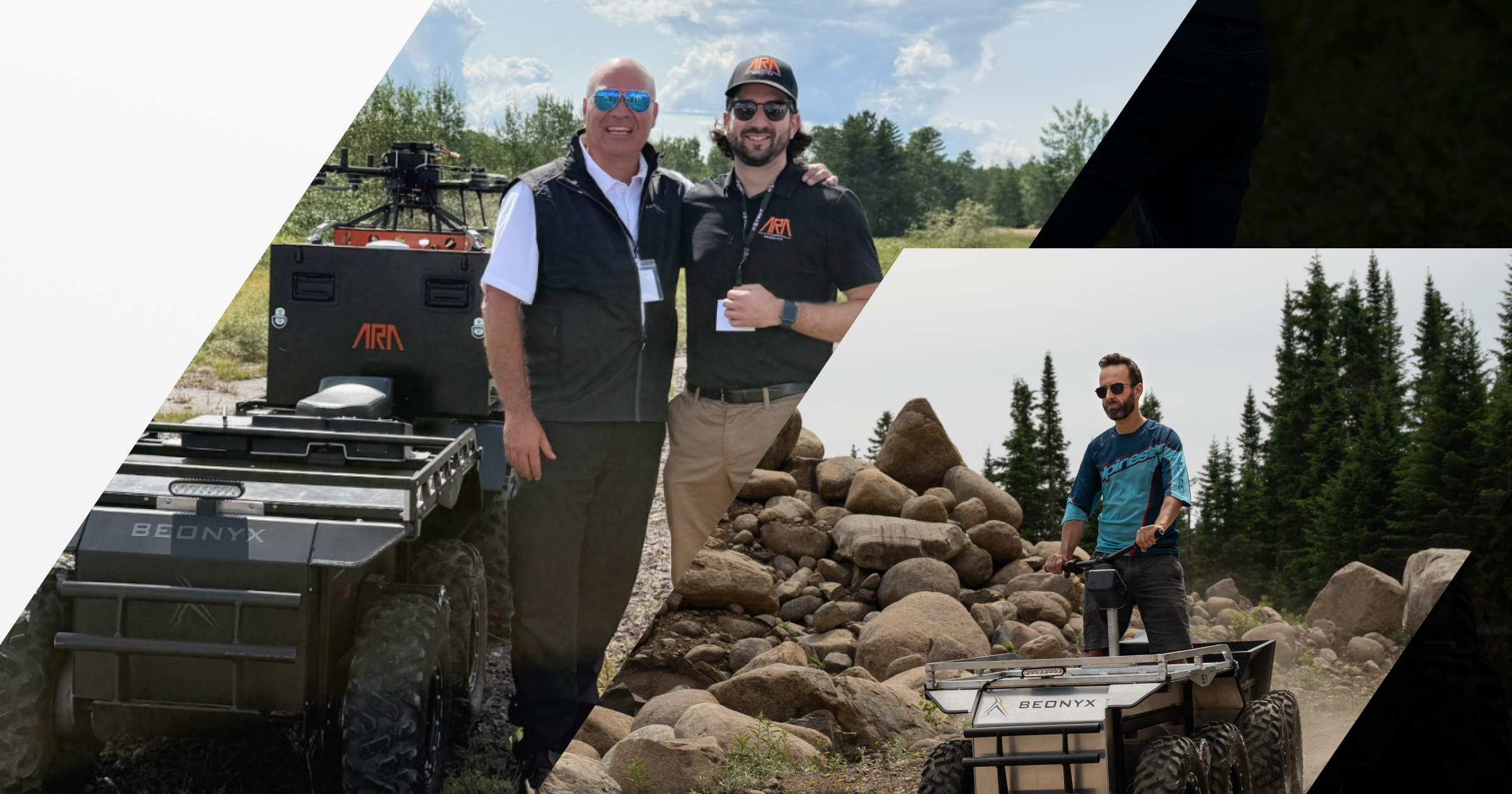
For co-founder Louis Déry, the most valuable insights came from seeing how customers used the B1 in real conditions.
“The most conclusive and enriching experiences for Beonyx were the outings with our vehicles on our clients’ challenging terrain,” Louis says. “Understanding the clients’ realities on the ground allows us to find tailored solutions.”
Those experiences revealed needs that couldn’t always be anticipated during development. For example, municipal customers helped Beonyx rethink elements such as the construction of the electrical box, while testing with Maren-go on airfields exposed tire wear and gearbox damage associated with extended operation on asphalt.
Each perspective gave Beonyx another opportunity to strengthen its platform. As co-founder Michael Martel explains, “Always listen to the client. We always keep a list of ideas from our clients to optimize the machine.”
Preparing the B1 for Greater Demand
Beonyx has entered a new stage. This year, we’re preparing to deliver as many as 20 machines, including 10 B1s for the Canadian Armed Forces. A new manufacturing partnership is also expected to help us increase production without compromising the qualities that distinguish the platform.
Our decision to work with an established manufacturing partner is about more than increasing output. Access to existing equipment, assembly capabilities, supply chains, and production expertise will allow us to scale more quickly while our internal team remains focused on development. and performance, plus new capabilities.
“We have reached the mass production stage of our platforms,” Louis says. “This milestone demonstrates the ever-growing interest in a multi-purpose ground drone solution.”
This progress has also attracted broader recognition. Beonyx was selected as 1 of 9 recipients from 109 submissions to a Canadian defence innovation initiative. We were also named one of 40 promising Quebec companies to watch by Le Journal de Québec.
Together, these accomplishments reflect the growing interest in Canadian-built technologies that can support civilian and military operations.
Giving Autonomous Technology a Stronger Foundation
The B1’s evolution is also supporting a wider network of autonomous innovation. Software partners Tesselate, METI Micro Engineering, and Maren-go contribute specialized technologies that expand what autonomous and remotely operated systems can do. So far, these partners have purchased 7 B1s.
Their investment demonstrates the B1’s importance in the autonomous ecosystem. While artificial intelligence and autonomous software are advancing rapidly, their real-world potential can be restricted by the mobility, durability, or reliability of the vehicles on which they operate. This is the critical gap the B1 is designed to fill.
“Artificial intelligence cannot reach its full potential because vehicles are limited. Beonyx pushes back this limitation,” Louis explains. “A more efficient, reliable, robust platform adapted to various autonomous systems. That’s what Beonyx offers.”
Espace Aéro Director of Innovation Nataliya Vinitska sees this type of collaboration as essential to building a stronger Canadian innovation ecosystem. Through her work advancing the Nexus U-DISH initiative, she’s helping connect innovators with end users so technologies can be tested and commercialized more effectively.
“It’s beyond the success of the company. It is for the legacy. It is for the ecosystem,” Nataliya says. “It is the collective success of the ecosystem.”
This collective approach is transforming specialized technologies into complete, deployable solutions. Beonyx provides the robust physical platform, while its partners bring the software and systems needed to extend its capabilities, and end users supply the field experience necessary to keep improving both. Nearly half a decade of testing has shaped the B1 into more than an autonomous all-terrain vehicle. It’s become the foundation on which Canadian innovators can develop stronger, more capable systems for the real world.