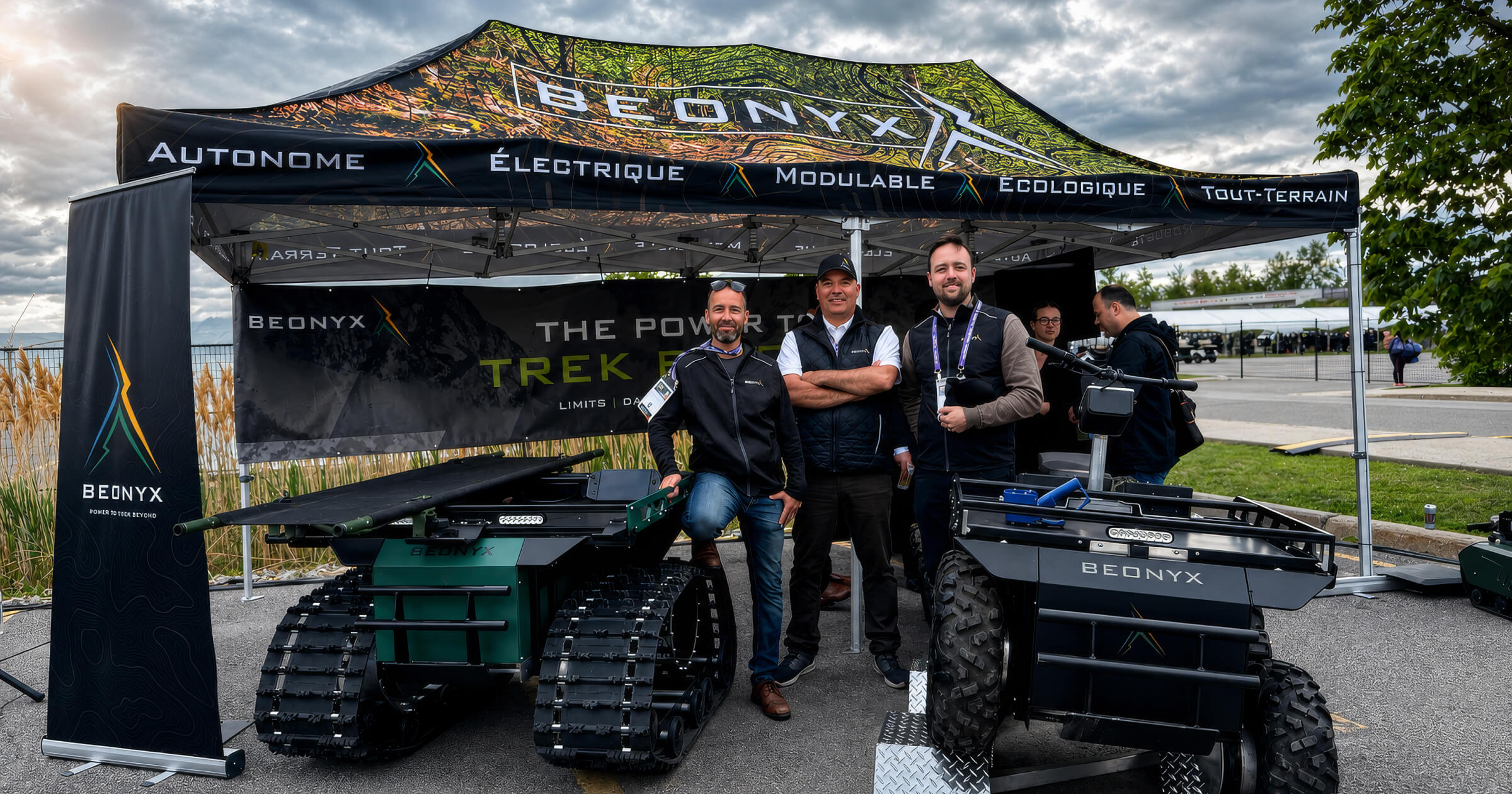
In the last year, Beonyx has moved from testing where the B1 can operate to defining where it should. What started as a broad, multi-industry exploration has evolved into a more focused, performance-driven strategy. Through deployments across tourism, infrastructure, emergency response, and defense, our team has identified where the platform delivers the most value and we’re letting it guide our next steps.
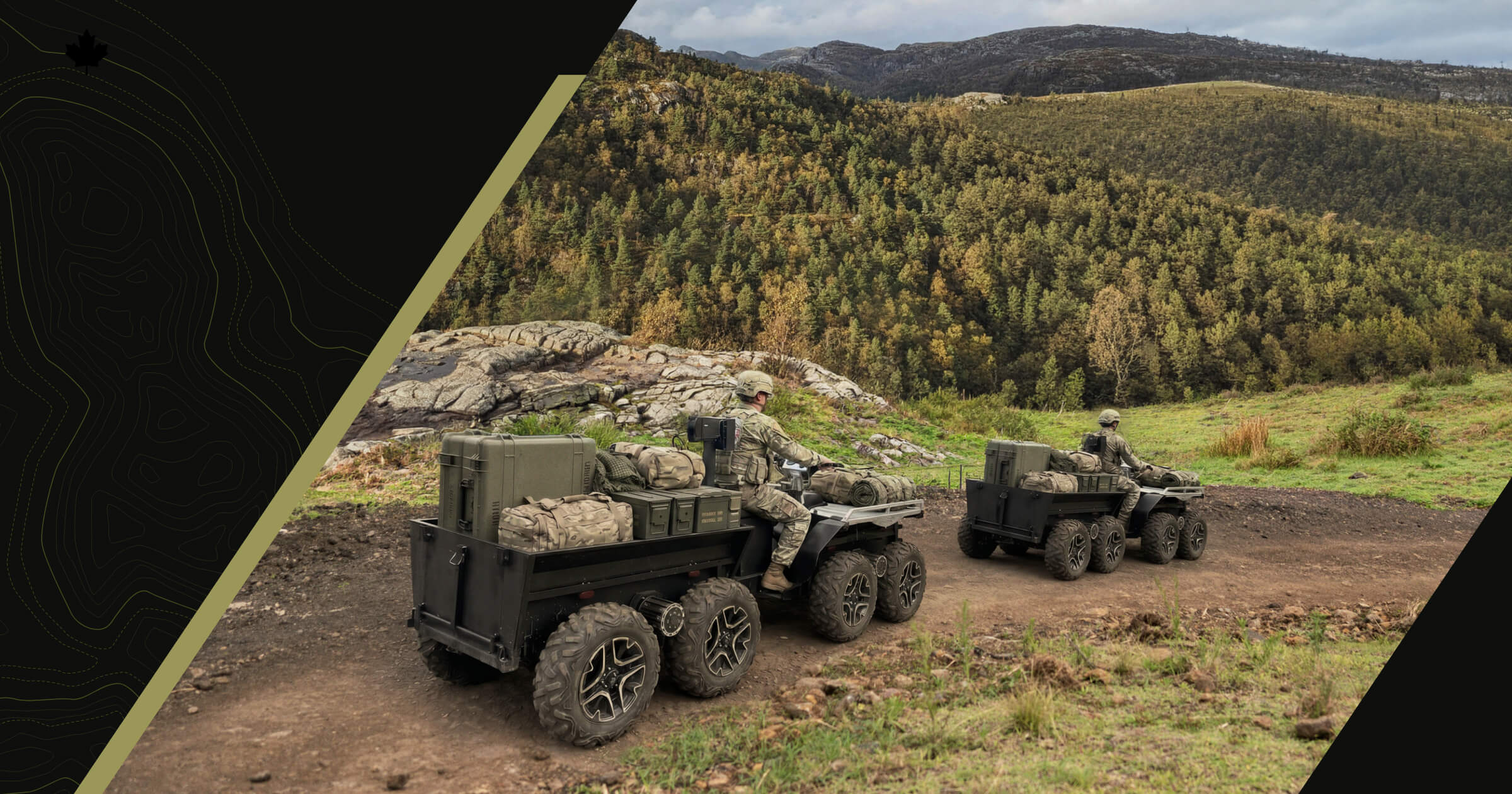
Beonyx is now aligning with an intentional 80/20 model, with 80% of our focus on military and defense applications, and 20% on civilian use cases that share operational demands. This isn’t a change in direction, but rather a refinement based on what the B1 is proven, positioning it as one of the most advanced Canadian technologies available for demanding operations.
From Multi-Industry Exploration to Performance-Based Clarity
Early deployments were designed to test the B1 across a wide range of conditions. It was used to transport people across mountainous terrain at sites like Empire 47, support infrastructure work in remote locations, and assist in emergency response scenarios such as Mont-Sainte-Anne, where access and control are critical.
Each environment tested a different aspect of the platform, including:
- Stability under heavy loads
- Adaption across diverse tasks
- Traction on uneven terrain
- Ability to operate without infrastructure
The results were consistent. The B1 performed exceptionally across industries, with its advantages becoming more apparent as conditions grew more complex. In predictable environments, it improved efficiency. In unstable environments, it enabled operations that would otherwise be difficult or impossible, proving to be of critical value.
Why The Focus on High-Stakes Environments
The B1’s ability to excel in challenging environments isn’t incidental. It’s exactly what the vehicle was designed for.
The B1 was built for terrain where traditional vehicles lose reliability, from steep slopes and soft ground to areas without defined access routes. Its 8×8 system is supported by a patented rocker-arm suspension, which keeps all eight wheels in continuous contact with the ground, maintaining traction under load.
Unlike other off-road vehicles that rely on braking to steer or distribute power unevenly, the B1 uses articulated steering to maintain full traction at all times. This allows it to move more consistently across uneven terrain without sacrificing control or energy efficiency.
With an ultra-low center of gravity and the ability to operate on slopes up to 35° laterally and up to 50° frontally, the vehicle stays stable in conditions where tipping risk and loss of control usually limit access.
These capabilities are delivered through a single integrated platform. Control modes, system deployment, and performance monitoring are all built into a single interface. Teams can manage operations in one place, switch between onboard, remote, and AI-assisted modes, and make changes in the field without add-ons or reconfiguration.
In situations where access is limited and maintaining control is crucial, the B1 performs at its highest level and has the greatest operational impact, informing our new focus.
What This Shift Changes for Deployment and Adoption
This shift is already changing how the B1 is deployed. Instead of positioning the platform across a broad range of industries, we’re homed in on clearly defined operational use cases.
This has clear strategic benefits. For customers, it removes ambiguity. The B1 is no longer presented as a flexible option, but as a solution for specific challenges that have already been extensively validated in the field. This clarity is already leading to more targeted adoption, as teams can better identify where the B1 fits in with operations.
For Beonyx, it creates a more efficient path for scaling. Development is focused on a narrower set of requirements, deployments are more targeted, and partnerships are built around clearly defined operational needs.
What This Means for the Next Phase of Beonyx
Our transition from exploration to precision is reshaping how the B1 evolves. Now, each improvement responds to the clear, measurable demands of high-stakes environments. This means refining control systems, expanding energy capabilities, and strengthening integration with remote and autonomous operation, improvements that directly reflect field use.
At the same time, the platform’s modular design ensures these advancements extend beyond defense. Civilian applications that operate under similar constraints will continue to benefit from the same engineering improvements. We’re no longer exploring where the B1 fits. We’re building from a position of clarity, focused on where it performs best and scaling from there.